ECONOMY · 2026-11-20
Why Does Life Feel So Tight Even as the Middle Class Grows? The ‘Money Left Over’ Problem in Korea’s Middle Class
Statistics show that the middle class has expanded, but many point out that once housing costs, loan repayments, and education expenses are covered, it is hard to feel any real breathing room. Based on a Gyeongin Ilbo column, this article looks at the gap between middle-class income and lived experience, and what it means economically.
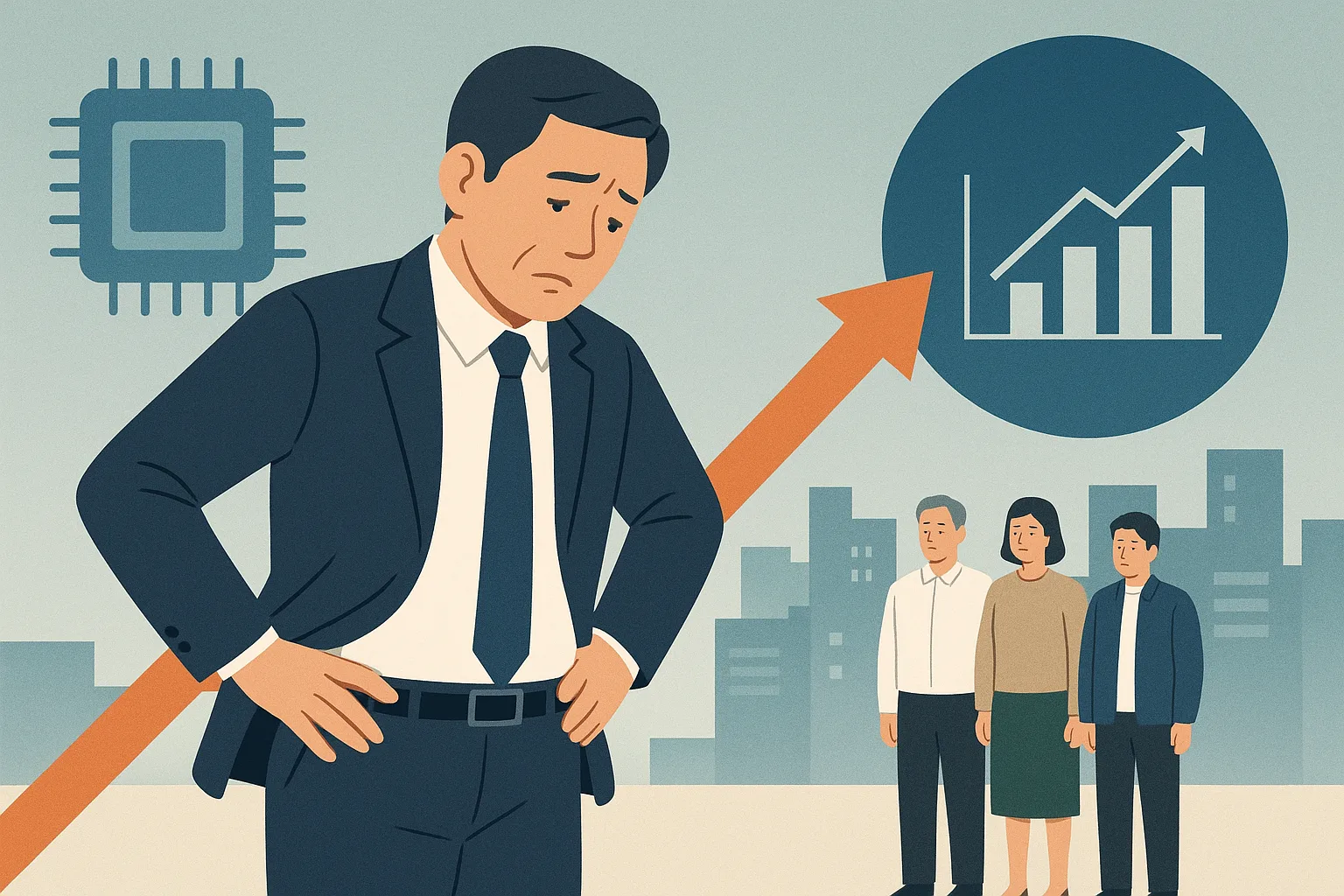
Even if semiconductor exports are doing well and economic growth comes in above expectations, it is hard for a household to feel the warmth of growth when there is almost nothing left in the bank account after monthly loan principal and interest payments, along with education expenses, are paid. An economic column published in Gyeongin Ilbo described this gap as the problem of the middle class becoming increasingly “thin around the waist.” The difficulties facing the middle class do not stop at one household’s finances; they can also affect consumption and the broader economy.
The middle class’s numbers and its lived reality are different
According to National Data Office standards cited in the column, the share of the population with income between 50% and 150% of median income rose from 57.4% in 2013 to 63.0% in 2023. But among people who said they were middle class, the share who believed the next generation would have a better chance of moving up the social ladder fell from 38.9% to 31.5% over the same period. In other words, even though more people fall into the middle class by income standards, confidence that the future will improve has not risen along with it.
The column also introduces NH Investment & Securities’ report, “Korea’s Real Middle Class.” By equivalized income, 52.9% of all households are classified as middle class, but the so-called “real middle class” — those who have not only appropriate consumption and savings, but also assets, debt management, and retirement preparation in place — accounts for just 24.6%. This figure shows that income brackets alone cannot fully explain the financial breathing room households actually feel.
What matters more than income: money left over
According to the column, real income for households in the top 10% to 50% of income rose by 54% over the same period. But when unavoidable expenses such as housing, education, and loan repayments grow quickly, income gains are not easily translated into a more comfortable daily life. The column also noted that even households that own homes often lack cash they can use right away. It is a way of describing the situation where people may have assets, but still struggle to cover monthly expenses.
The burden of buying a home also affects entry into, and staying in, the middle class. The column said that even though dual-income households have become more common, the burden of purchasing a home has grown, and cited Ministry of Land, Infrastructure and Transport data showing that it takes an average of eight years after becoming the head of a household to buy a first home. It also said that in Seoul, even if a household saved every bit of its income without spending any of it, it would still take nearly 14 years to buy a home. In this environment, the pressure of housing and childrearing may lie behind why young people delay marriage or childbirth.
The recovery of the middle class is also an economic issue
When households feel uncertain and cut back on spending, that can also put pressure on the sales and employment of small business owners. It is only natural for each household to spend more carefully, but if many households reduce consumption at the same time, the economy as a whole can see both income and spending contract. The column connects this to the “paradox of thrift,” explaining why strong exports do not translate into the same sense of improvement for every household.
The policy direction suggested by the column is to create room for the middle class to breathe financially. It points to household debt management that takes manageable housing costs and repayment capacity into account, restoring trust in public education and care, and easing the burden of private tutoring expenses as key tasks. The point is not to neglect support for vulnerable groups, but to argue that the difficulties of the middle class should not be dismissed simply because they are viewed through an income lens.
The thickness of the middle class should be judged not only by how much people earn, but also by how much is left after essential expenses are paid. This perspective matters not just for welfare policy, but also for understanding the foundations of consumption and growth. At the same time, housing costs, education costs, and debt burdens vary from household to household, so it is hard to judge living conditions based on income brackets alone. The figures and policy suggestions above are based on the Gyeongin Ilbo column.
The middle class’s numbers and its lived reality are different
According to National Data Office standards cited in the column, the share of the population with income between 50% and 150% of median income rose from 57.4% in 2013 to 63.0% in 2023. But among people who said they were middle class, the share who believed the next generation would have a better chance of moving up the social ladder fell from 38.9% to 31.5% over the same period. In other words, even though more people fall into the middle class by income standards, confidence that the future will improve has not risen along with it.
The column also introduces NH Investment & Securities’ report, “Korea’s Real Middle Class.” By equivalized income, 52.9% of all households are classified as middle class, but the so-called “real middle class” — those who have not only appropriate consumption and savings, but also assets, debt management, and retirement preparation in place — accounts for just 24.6%. This figure shows that income brackets alone cannot fully explain the financial breathing room households actually feel.
What matters more than income: money left over
According to the column, real income for households in the top 10% to 50% of income rose by 54% over the same period. But when unavoidable expenses such as housing, education, and loan repayments grow quickly, income gains are not easily translated into a more comfortable daily life. The column also noted that even households that own homes often lack cash they can use right away. It is a way of describing the situation where people may have assets, but still struggle to cover monthly expenses.
The burden of buying a home also affects entry into, and staying in, the middle class. The column said that even though dual-income households have become more common, the burden of purchasing a home has grown, and cited Ministry of Land, Infrastructure and Transport data showing that it takes an average of eight years after becoming the head of a household to buy a first home. It also said that in Seoul, even if a household saved every bit of its income without spending any of it, it would still take nearly 14 years to buy a home. In this environment, the pressure of housing and childrearing may lie behind why young people delay marriage or childbirth.
The recovery of the middle class is also an economic issue
When households feel uncertain and cut back on spending, that can also put pressure on the sales and employment of small business owners. It is only natural for each household to spend more carefully, but if many households reduce consumption at the same time, the economy as a whole can see both income and spending contract. The column connects this to the “paradox of thrift,” explaining why strong exports do not translate into the same sense of improvement for every household.
The policy direction suggested by the column is to create room for the middle class to breathe financially. It points to household debt management that takes manageable housing costs and repayment capacity into account, restoring trust in public education and care, and easing the burden of private tutoring expenses as key tasks. The point is not to neglect support for vulnerable groups, but to argue that the difficulties of the middle class should not be dismissed simply because they are viewed through an income lens.
The thickness of the middle class should be judged not only by how much people earn, but also by how much is left after essential expenses are paid. This perspective matters not just for welfare policy, but also for understanding the foundations of consumption and growth. At the same time, housing costs, education costs, and debt burdens vary from household to household, so it is hard to judge living conditions based on income brackets alone. The figures and policy suggestions above are based on the Gyeongin Ilbo column.
Source: [경제전망대] 외면받는 중산층, 얇아지는 허리
Related search terms
#Korea middle class#middle class income gap#housing costs in Korea#household debt in Korea#education expenses and middle class#Korean middle class living standards#real middle class Korea